Source: collab.am, August 2023
"The task now is overcoming alienation between people"
the independent chamber theatre arten
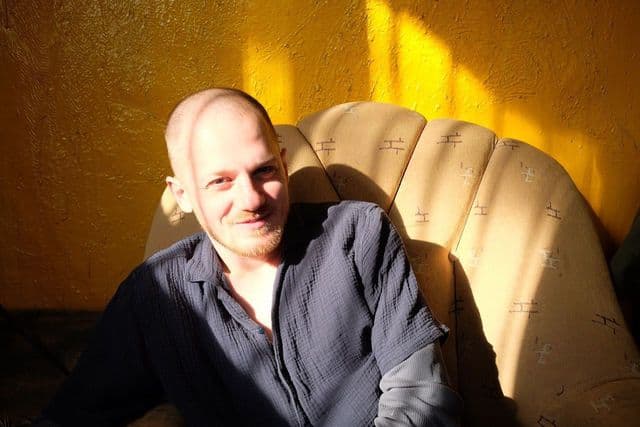
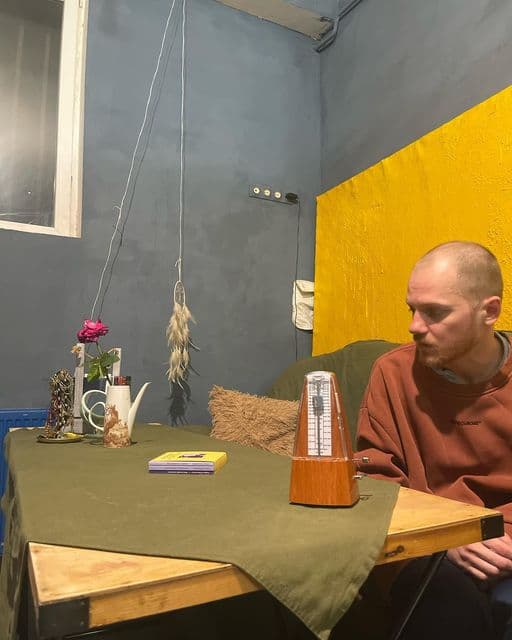
arten — an unusual chamber theater. Here it is necessary and important to think, to discover new meanings; here the idea of universal human values matters; here you can hear yourself.
Its artistic director Alexander Teterev-Kosach first came to Armenia in 2018, during times of change, and was captivated by the people and what was happening in the country. At the end of 2022, together with his team, he opens an independent theater in Yerevan.
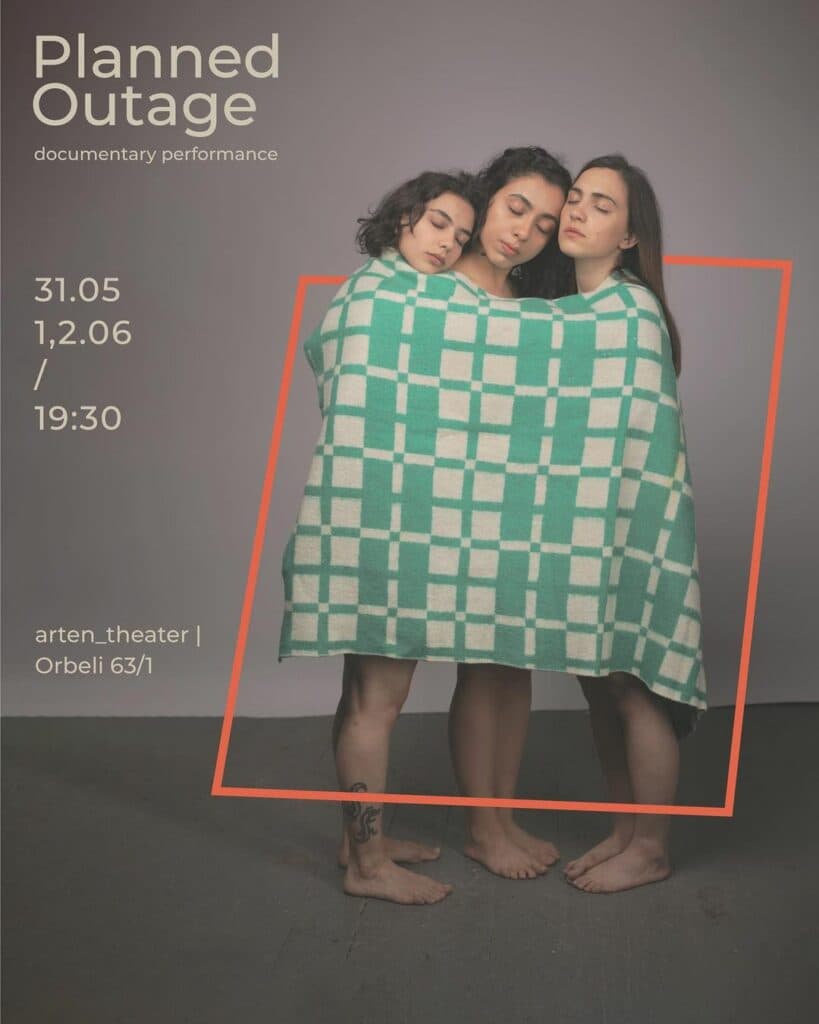
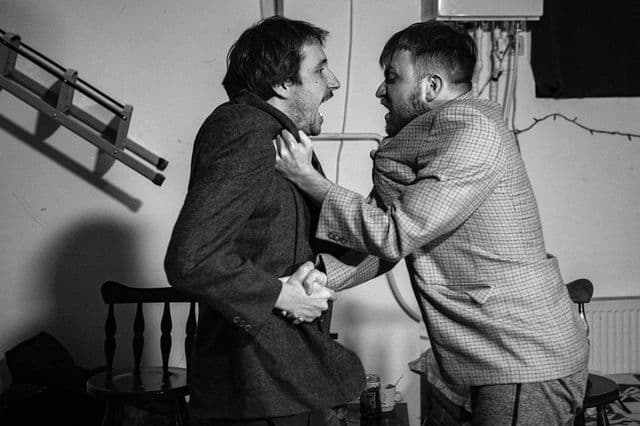
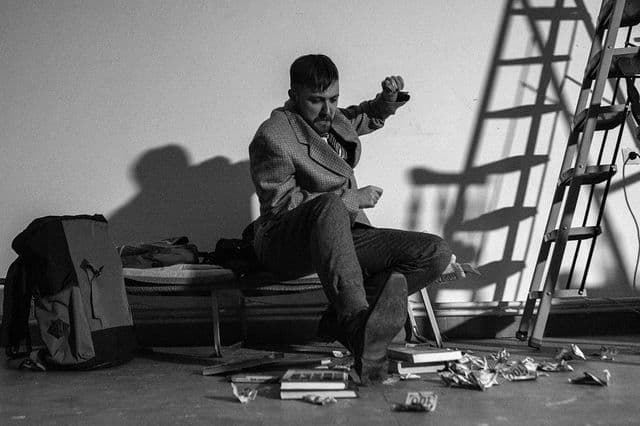
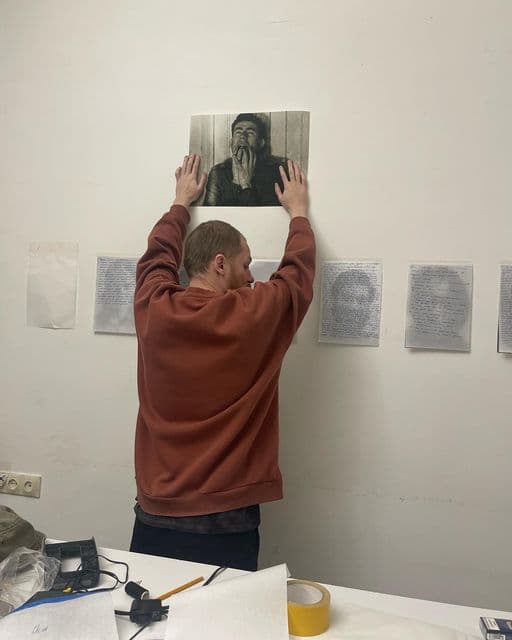
In its several months of activity, the project has seen the performance of theater director Vsevolod Lisovsky, the anti-war exhibition Deadlock, the documentary performance Planned Outage, and the play “The Emigrants” based on the work of Slawomir Mrozek. The space also hosts open rehearsals, lectures, film screenings, and events for children.
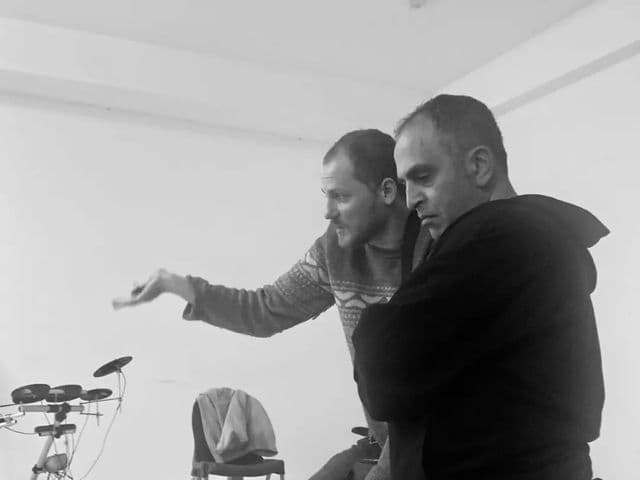
A program for the new season is currently being formed, and there are plans to create an acting school. Alexander is fully immersed in the rehearsal process.
We spoke with him about the tasks of theater in wartime, new productions, and his personal sense of the surrounding reality.
Sasha, hi! Tell us, how did theater begin for you?
Probably when I decided to apply to a theater university. I came to Moscow from the Tula region and for a while had no idea what to do with myself. I was finishing 10th-11th grade, and nothing was working out for me. The only thing that seemed like it might work out was theater.
Before theater, did you try yourself in anything else?
I'm simply dyslexic, and I only found out about it in adulthood. All of school flew past me; I barely studied. And all my further education happened within the theater environment.
You graduated from...
GITIS (the Russian Institute of Theater Arts). When I got in, I experienced a quantum leap — before that I had no idea what to do in life, I was a slacker, nothing interested me. And then I found something I fell in love with wholeheartedly — to such a degree that within a year or two at the institute I already had the air of an artist-type.
I started getting into serious conflicts with the teachers, and was always this unruly figure, because intuitively at that point I was dissatisfied with theater education.
In 2018 you came to Armenia and stayed for a long time. What prompted that decision?
In 2018 I came for a year to observe the revolution. I'm a person of leftist views — we leftists have this notion that when a revolution happens, society becomes energetically charged, starts living a real life, everyday existence becomes more poetic. And for me in 2018 it was very important to see this in a country like Armenia — it was my first time abroad. And for me it was a time of fairy tale.
I stayed exclusively because I simply couldn't return to Russia — to a place where there was no scent of revolution.
How did the theater arten come about?
The formation of the team was enormously important. Aya Manukyan appeared, and she immediately supported me. In 2018 I didn't have a team like that. Gradually, many people got involved. Pasha (Pavel Artemyev) is here now — a director who came with us.
The artist whose studio this is, Araik Petrosyan, expressed a desire to help me. And organizational responsibility came crashing down on me. I was a bit afraid of it, but Aya and Pasha supported me.
You truly are an excellent example of the interaction between emigrants and the Yerevan creative community. How do these collaborations happen?
Another reason I stayed in 2018 — it was a psychotherapeutic thing for me. I very much wanted to completely destroy this colonial mode of consciousness, retrain myself, tune into a different frequency.
I think I partly succeeded, and Armenians sense it. Armenians are more empathetic as a whole than we are — and they very quickly pick up on any chauvinistic attitudes. I think I manage to communicate in a way that they don't feel that from me.
At the end of April you organized an anti-war exhibition — what meaning do you see in such statements?
I think many people who are on the other side, pro-war, often agree with it because they feel the power. Perhaps one of the goals of the exhibition is co-realization: if we do this together, if we have many conscious artists, then some other community may join them. It becomes a stronger unit that can subsequently command respect. And together we become louder.
I think the main problem of Russians is alienation. We don't have natural communication. Today the task of theater and exhibitions is overcoming alienation between people.
Don't you think many relocants continue living in tourist mode?
Yes, of course, it's a mass problem. That's why one of the important goals of this theater's existence is precisely to create more serious spaces where real problems are discussed, where we can show what is currently happening, where we are open to discussion. For people living in hedonistic mode, I think this will be useful, even therapeutically.
What will never be shown at the arten theater?
Yes, we cancelled a lecturer who held imperialist positions. The entire right-wing milieu will not enter this theater. Any homophobic statements are not welcome — we completely disagree with that. We will have no collaborations with the right.
What are you planning to stage in the near future?
We're staging “The Unbearable Lightness of Being” by Milan Kundera. The production will be called “Traitors” — we rehearse every day from morning to evening.
Does the theater have a permanent troupe?
We have a permanent troupe of actors, but it's still small. There are 3-4 other actors, directors who are somewhat in a floating state, but they're already ours. And there's a group of contemporary artists who are also permanent.
We want to create an acting school — right now we're experimenting. We ourselves are practicing various theatrical methodologies and want to eventually put together a program. We're currently emphasizing politics. The selection of works happens at the intersection of two criteria: the first is ethical — we will not work with talented fascists. And the second — we will not allow someone to do work if they don't understand the subject, but we can offer them our laboratory.
Which theaters in Armenia have you visited? Which one is closest in spirit?
I visited the Puppet Theater, the Stanislavsky Theater — those are academic. In Babylon I went — you can't say we're similar, except perhaps in that it's also a grassroots street initiative. I really liked the Gyumri theaters — you can't convey how sincere, how honest the performances in Gyumri are — like a primal call.
Yerevan and Tbilisi are among the main centers of Russian emigration. There's an opinion that there's more creative activity in Georgia. Do you think so?
On the contrary, it repels me when the bohemians go somewhere. I feel much more comfortable now in Yerevan than in Tbilisi or Berlin, despite the fact that the German capital is much more developed in terms of theater.
I like the fact that in Armenia there's almost none of that. You can start doing it here in a purer form. And I simply love Armenia — maybe that's related. I have this irrational love — I can't explain it.
Do you believe in a bright future for Russia?
For Russia I'm not sure, honestly. I'm a closet patriot — I feel responsibility for my country. I can no longer wish for a bright future. It looks like symptoms of an empire's destruction. When it crumbles, it must be destroyed — that's the feeling. I very much hope it can be reborn in another form. I'm just very afraid it will happen through blood.
Author: German Sokh. Originally published August 7, 2023 on collab.am. Translation from Russian.